


Air springs have revolutionized heavy-duty truck suspension systems, replacing traditional leaf springs with pneumatic technology that delivers superior ride quality and load management. Understanding the different types of air springs is essential for maintaining optimal vehicle performance and driver comfort.
Modern heavy-duty vehicles utilize four primary air spring configurations, each engineered for specific applications. This guide examines cabin air springs, convoluted air springs, reversible sleeve air springs, and pickup truck air springs—exploring their key differences.
Cabin Air Springs: Protecting Driver Comfort
Cabin air springs represent the smallest air spring category, designed for driver seat suspension systems and cab mounting systems. These compact sleeve-style components typically measure 80-130mm in diameter, allowing them to fit into tight spaces where traditional mechanical suspension would be impractical.
In seat applications, these air springs absorb vertical and lateral vibrations. Prolonged exposure to whole-body vibration can lead to chronic back pain, fatigue, and reduced reaction times—making quality seat suspension a safety consideration. The pneumatic nature allows for individual adjustment based on driver weight and preference, maintaining consistent support throughout long hauls.
When used in cab mounting systems, cabin air springs act as isolators between the chassis and driver’s compartment. This significantly reduces road shocks and engine vibrations, creating a quieter and more comfortable working environment with adjustable height for optimal ergonomics.
Convoluted Air Springs: Heavy-Duty Load Management
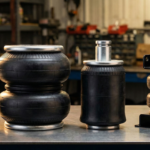
Convoluted air springs feature bellows-style construction with one, two, or three flexible chambers. The double convoluted design—resembling two stacked tires with a tapered ring between chambers—is most common in commercial applications.
When compressed, convoluted air springs bulge outward rather than folding inward, preventing rubber-on-rubber contact that causes premature wear. This allows very low compressed heights while offering larger diameters for increased load capacity.
Single convoluted air springs work well for fixed-height applications like air-cushioned hitches. Double convoluted configurations dominate trailer suspensions and drive axle applications. Triple convoluted units provide maximum travel capability, ideal for lift axle deployment where substantial extension and compression ranges are required.
These air springs use bead plates—flat mounting surfaces permanently crimped to the rubber bellows. The load-carrying efficiency is remarkable: where a sleeve-style air spring might require 70 PSI to lift 1,000 pounds, a double convoluted design accomplishes this at approximately 35 PSI, reducing stress on air system components.
Reversible Sleeve Air Springs: Industry Standard
Reversible sleeve air springs have become the predominant choice for heavy-duty truck and trailer suspension. This design features a flexible rubber sleeve that rolls up and down over a piston assembly, creating a compact profile that unfolds as the suspension extends.
The construction incorporates durable nylon-reinforced rubber formed into a cylindrical sleeve. The piston component provides a rolling surface, minimizing internal friction and wear. One key advantage is the extended range of travel—as the suspension compresses, the rubber sleeve rolls up onto itself, then unfolds smoothly during extension.
The smaller diameter compared to convoluted types makes reversible sleeve air springs valuable in space-constrained applications. This space efficiency has contributed to their widespread adoption in modern truck and trailer suspensions.
Most reversible sleeve air springs are identified by Firestone part numbers, typically referenced by their last four digits. The rubber bellows carries identification molded directly into the material—usually formats like “1T15M-6″—simplifying replacement part identification.
Pickup Truck Air Springs: Towing and Hauling Support
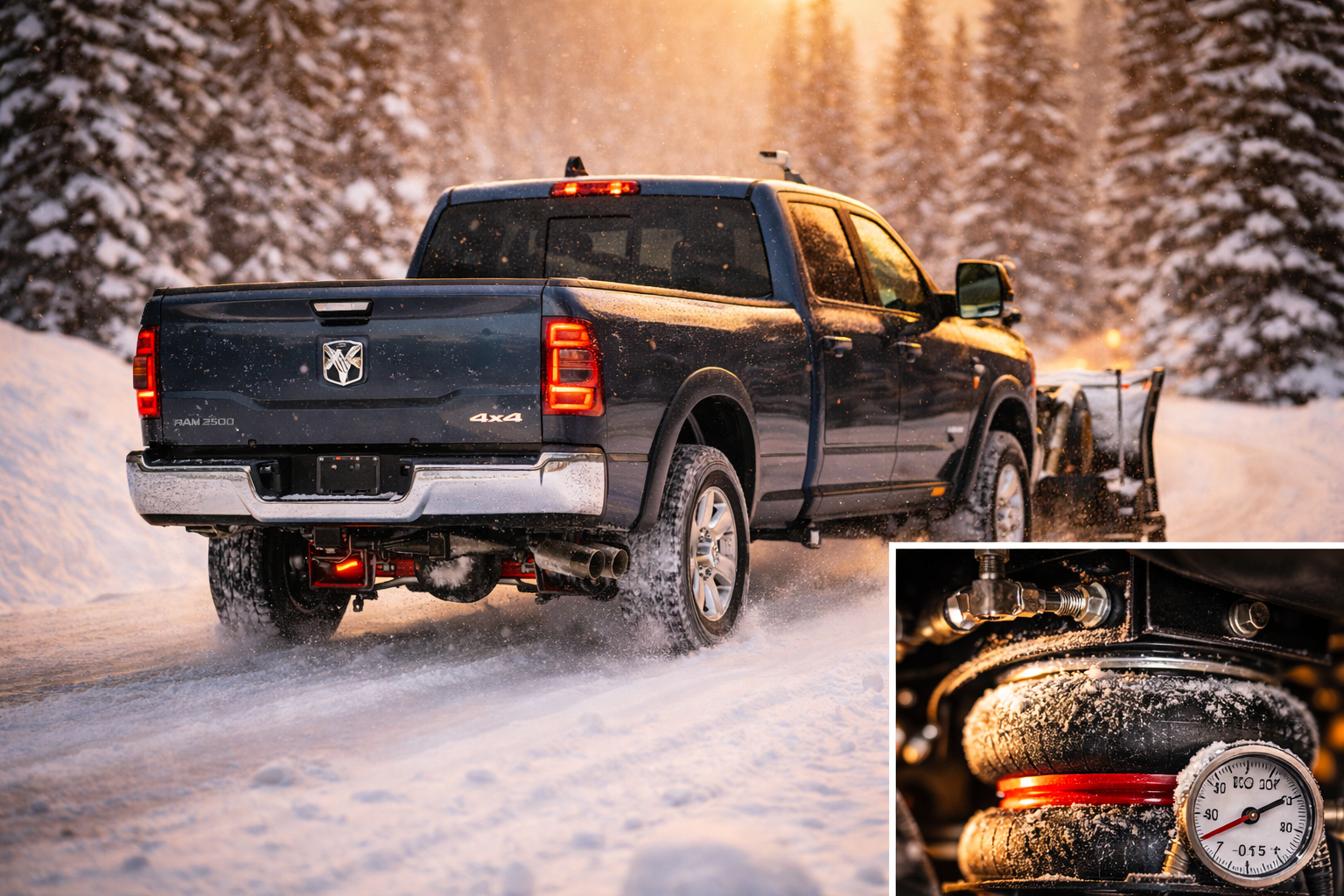
Pickup truck air springs, often marketed as air helper springs, supplement factory suspension rather than serving as primary components. When trucks are loaded or towing, rear suspension sag creates problems: headlights point skyward, steering response diminishes, and trailer sway increases. Pickup truck air springs level the vehicle by providing adjustable load support.
These systems utilize sleeve-style or convoluted air springs mounted between the axle and frame. The key benefit is adjustability—operators can inflate or deflate to match current loads. When unloaded, reduced pressure maintains factory ride quality. When hauling, increased pressure provides necessary support.
Modern kits often include on-board air compressor systems for in-cab adjustment. Advanced systems feature wireless controls and automatic leveling that detects load changes.
Air helper springs do not increase a vehicle’s GVWR or towing capacity—these ratings depend on axle strength, brakes, transmission, and frame. Air springs simply help existing suspension manage approved loads more effectively. Load capacity ratings vary: sleeve-style systems support 900-2,500 pounds per bag, while heavy-duty convoluted designs handle 3,750-5,000 pounds per bag.
Selecting the Right Air Spring Type
Choosing the appropriate air spring depends on application requirements. Heavy-duty commercial applications requiring maximum load capacity favor convoluted air springs with their pressure efficiency and low compressed height—ideal for lift axles and industrial use.
Applications demanding extensive suspension travel and compact packaging benefit from reversible sleeve air springs. Their rolling action explains why they’ve become the industry standard for truck and trailer suspension systems.
Cabin air springs deliver specialized performance for driver comfort, with small size and adjustable height essential for modern ergonomic cab designs and seat suspension systems.
Pickup truck owners should evaluate hauling patterns. Those frequently switching between loaded and unloaded conditions benefit most from adjustable air helper springs with on-board compressor capabilities.
Quality matters significantly. Premium air springs with thicker rubber compounds deliver longer service life. Torque USA’s air springs meet demanding standards, backed by comprehensive warranty coverage.
Maintenance and Performance
Proper maintenance extends air spring life and ensures optimal performance. Regular visual inspections should check for cracking, abrasion, or weathering. Air leaks require immediate attention to prevent complete failure.
For convoluted air springs, verify bead plate mounting bolts remain properly torqued and rubber bellows maintains intended shape. Reversible sleeve designs should move smoothly on the piston without binding.
Cabin air springs in seats benefit from periodic cleaning to remove debris. Pickup truck air helper springs require maintaining minimum air pressure (5-10 PSI) even when unloaded to prevent material damage.
Environmental factors affect performance. Extreme cold reduces rubber pliability, while high heat accelerates aging. Operating within recommended pressure ranges prevents overextension or bottoming out.
Conclusion
Understanding the distinct characteristics of cabin air springs, convoluted air springs, reversible sleeve air springs, and pickup truck air springs enables informed decisions about suspension system maintenance and upgrades. Each type addresses specific requirements:
- Cabin air springs prioritize driver comfort through vibration isolation in seats and cab mounts
- Convoluted air springs deliver maximum load capacity with exceptional pressure efficiency for heavy-duty applications
- Reversible sleeve air springs provide industry-leading suspension travel and reliability for primary truck and trailer systems
- Pickup truck air springs offer adjustable load support that enhances towing and hauling safety without compromising unloaded ride quality
Final Answer: The right air spring selection depends on matching component characteristics to application requirements while prioritizing quality construction that ensures long-term reliability and performance.
For comprehensive heavy-duty truck parts including premium air springs across all categories, visit Torque USA or explore their commitment to manufacturing excellence at About Torque USA.