



Air Bag Suspension Kits in Winter: Cold Weather Performance and Maintenance
Pickup truck owners who tow and haul year-round often wonder whether air bag suspension kits for pick-up trucks can handle harsh winter conditions. The good news is that modern air suspension systems are designed to operate in freezing temperatures, but they do require specific maintenance and preparation to ensure reliable cold-weather performance. Understanding how winter affects your air suspension helps you avoid common problems and keeps your truck working when you need it most.
How Cold Weather Affects Air Suspension Systems
Temperature directly impacts air pressure inside suspension bags. Air pressure drops approximately one PSI for every 10-degree Fahrenheit decrease. If you set airbags to 50 PSI on a 70-degree day, expect around 40 PSI on a 30-degree morning. This pressure drop is physics, not a leak – cold air contracts naturally.
Moisture condensation poses the biggest winter threat. Compressor operation creates condensation, which remains liquid in warm weather but freezes in cold, potentially blocking air lines, freezing valves, or damaging compressors. Rubber components become less flexible at extreme cold, though quality air bag suspension kits use materials that function reliably down to negative 30 degrees Fahrenheit.
Preparing Your System for Winter
Start by draining your air tank completely. Locate the drain valve at the tank’s lowest point, open it, and allow all accumulated water to drain. This simple step removes moisture that could freeze.
Installing additional water traps provides extra protection, capturing water droplets before they enter the system. Consider adding air brake antifreeze to prevent ice formation in air lines and valves. Follow manufacturer recommendations for proper dosage – typically a few ounces added to the air tank.
Check all air lines and fittings for damage before winter. Cold weather amplifies existing problems. Replace any questionable lines or fittings now rather than dealing with failures in freezing conditions.
Winter Maintenance Best Practices
Drain your air tank at least monthly during winter, more frequently in humid climates. Moisture accumulates faster when temperatures fluctuate above and below freezing. Check air pressure weekly – cold weather makes pressure changes more dramatic. Maintain proper inflation to protect components and ensure safe operation.
Inspect airbags and air lines after exposure to road salt. Rinse your truck’s undercarriage periodically, paying attention to suspension components. Ensure Schrader valve caps remain in place to prevent moisture and salt from entering valves.
For onboard compressor systems, check air filters regularly. Snow and salt spray can clog filters faster than summer dust, forcing the compressor to work harder.
Common Cold Weather Problems and Solutions
If your truck drops significantly overnight in freezing weather, first rule out normal temperature-related pressure loss. Add air and observe whether height maintains through the day. Continued pressure loss indicates a leak.
Frozen valves present as inability to add or release air. Bring the truck into heated space and allow gradual warming. Never apply direct heat – it can damage rubber and plastic parts. Once thawed, drain the tank and add antifreeze.
Compressor issues in winter often stem from excessive moisture. If your compressor runs constantly on cold mornings, it’s fighting ice in the system. Allow the system to thaw, then drain all tanks and add antifreeze.
Stiff suspension after extreme cold usually resolves once the truck warms up. Allow gradual warming through normal operation rather than forcing immediate adjustments after cold starts.
Optimizing Performance in Snow and Ice
Many truck owners increase air pressure slightly when operating in snow and ice. Higher pressure reduces body roll and improves stability on slippery surfaces, though excessive pressure can reduce tire traction.
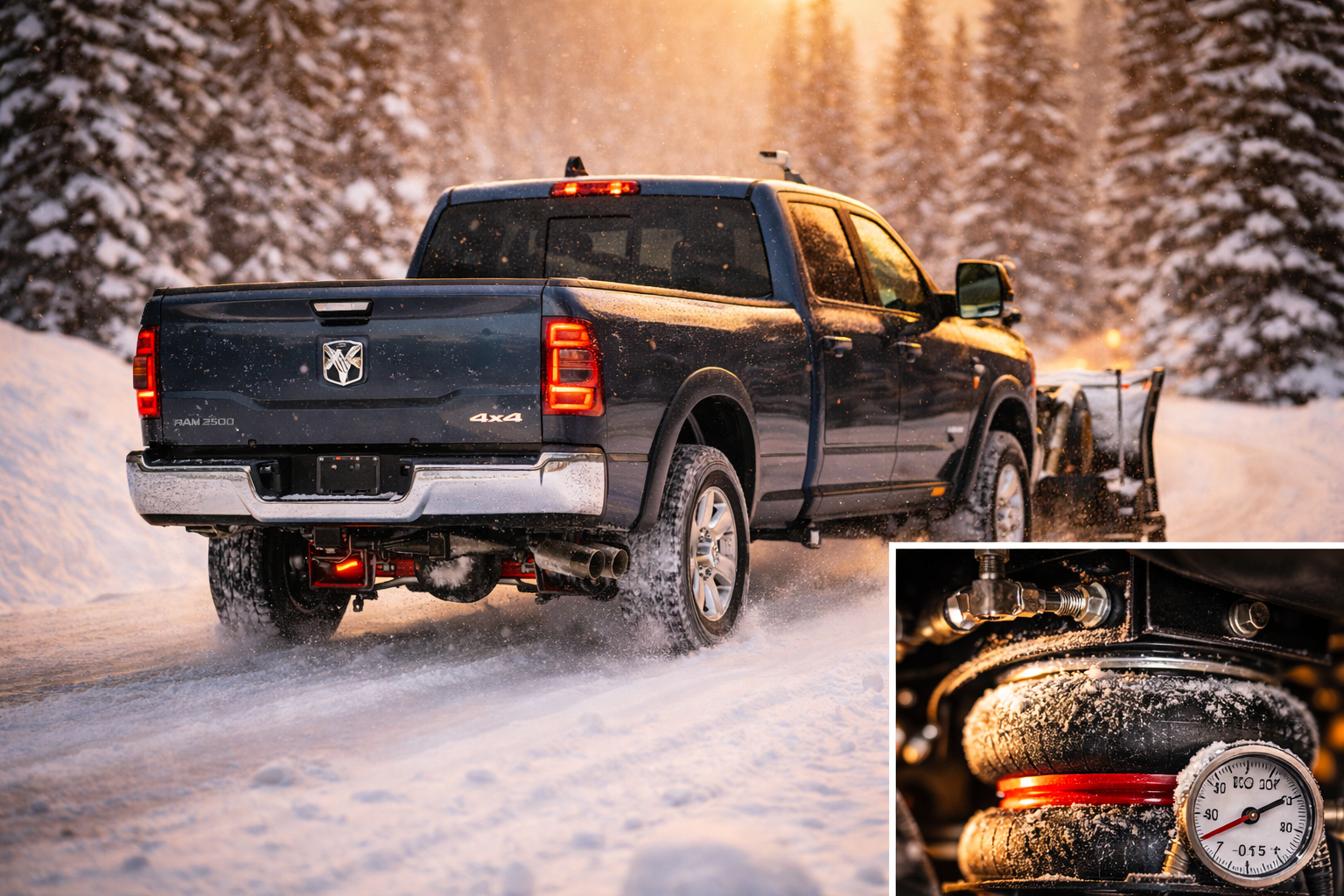
When plowing snow, raise the rear to maximum height for increased ground clearance. Clear packed snow and ice from around airbags after plowing – accumulated ice can restrict bag movement and cause uneven wear. For trucks with automatic leveling, understand the system works harder in winter as cold air requires more compression to achieve the same pressure.
Storage Considerations
If storing your truck during winter, inflate airbags to minimum recommended pressure (5-10 PSI) to maintain bag shape and prevent creasing. Drain the air tank completely – moisture can freeze and expand, potentially cracking tanks or damaging valves.
For extended storage, consider disconnecting the compressor electrically to prevent automatic cycling. Store in climate-controlled space when possible to prevent freeze-thaw cycles that introduce moisture.
Conclusion
Air bag suspension kits perform reliably in winter when properly maintained and prepared for cold weather operation. While temperature changes, moisture accumulation, and rubber flexibility present challenges, understanding these factors allows truck owners to take preventive measures.
- Temperature affects pressure – expect normal drops in cold weather and adjust accordingly
- Moisture management is critical – drain tanks regularly and use antifreeze in harsh climates
- Preventive maintenance before winter prevents most cold-weather failures
- Regular inspections catch small problems before they become major issues
- Proper settings optimize performance for snow, ice, and winter hauling conditions
Final Answer: Modern air suspension systems are engineered for year-round operation, including harsh winter conditions. Success in cold climates comes down to proper maintenance, moisture control, and understanding how temperature affects system performance. Truck owners who follow these guidelines enjoy reliable air suspension performance regardless of weather, maintaining the load support and adjustability that makes these systems valuable for serious hauling and towing.
Keep your truck ready for winter hauling with quality air suspension components and pickup truck parts from Aftermarket US, offering competitive prices and fast shipping on aftermarket upgrades. Learn more About Aftermarket US.
